OBSEA, IFCA and EGI: an open e-infrastructure for marine Science - supporting marine science together
Jan 21, 2026
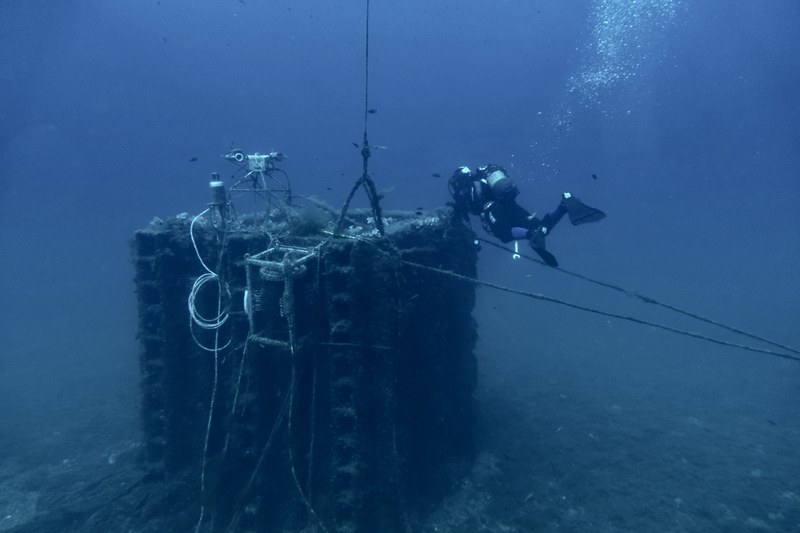
OBSEA’s daily operations and long-term scientific activities are made possible through an exceptional collaboration between OBSEA, IFCA and EGI. The long-standing collaboration developed through multiple initiatives, and more recently through the iMagine and ANERIS projects, reflecting a well-established and trusted partnership. IFCA (Instituto de Física de Cantabria) provides technical expertise and free-of-charge computational and storage resources, and EGI offers a collaborative framework that empowers marine research infrastructures and strengthens European scientific communities. This collaboration plays a key role in supporting OBSEA’s daily operations and long-term scientific activities.
OBSEA (Observatori Submarí d’Emissions Acústiques) is a cabled underwater observatory operated by the Universitat Politècnica de Catalunya and deployed off the Catalan coast in the Northwestern Mediterranean. Thanks to its permanent power supply and high-bandwidth communication link to shore, OBSEA enables continuous, real-time monitoring of marine environmental parameters, including acoustic emissions, oceanographic variables and imagery. Since its deployment, OBSEA has served as a multidisciplinary research platform supporting marine science, technology validation and environmental monitoring.
Thanks to the resources provided by IFCA, a member of the EGI Federated Cloud, OBSEA benefits from reliable cloud compute capacity, online storage and secure access services. These resources enable the processing, management, and dissemination of real-time and historical marine data generated by the observatory, reinforcing OBSEA’s contribution to coastal and deep-sea research. The Service Level Agreement established with EGI ensures the long-term continuity and sustainability of these services, with IFCA acting as the main computing resource provider.
This collaboration illustrates how EGI effectively supports research infrastructures and scientific communities by federating national and international resource providers and making advanced digital services accessible to users who might otherwise face significant technical or financial barriers.
Recurrent service performance reports further demonstrate the commitment to transparency and continuous improvement within the EGI ecosystem, highlighting how issues are monitored, reported and resolved through close cooperation between EGI, IFCA and the user community.
Web usage statistics further highlight the growing impact and visibility of OBSEA’s digital services. In 2024, the OBSEA website registered 889 visits, while in 2025 this number increased to 9 039. This represents an order-of-magnitude growth in user engagement, reflecting the increasing interest in OBSEA data, services and activities. The detailed traffic analysis shows a clear rise not only in total visits, but also in HTTP requests, unique visitors, and overall server activity, indicating more frequent and sustained interactions with the platform. The increase in served resources and bandwidth consumption is consistent with the growing use of real-time data services, visualisation tools, and downloadable datasets. These results underline the importance of reliable e-infrastructure and scalable computing resources, such as those provided through EGI and IFCA, to support the increasing demand placed on OBSEA’s web and data services.
At a broader European scale, OBSEA is part of the ecosystem supported by EMSO (European Multidisciplinary Seafloor and water-column Observatory). EMSO is a distributed research infrastructure that integrates deep-sea and water-column observatories across Europe, providing harmonised, long-term observations of the ocean to advance our understanding of marine processes, natural hazards and climate change. By supporting nodes such as OBSEA, EGI contributes directly to the robustness and interoperability of EMSO’s data services.
Interested in becoming part of the EGI Community? Apply to the EGI Access Call:
Share: